Master Key Systems
Businesses and property managers across Markham — from the dense commercial corridors along Highway 7 to the multi-tenant office parks near Warden Avenue — often reach a point where a single ring of keys becomes unmanageable. When every department head, shift supervisor, and executive carries a different key to every door they need to open, security breaks down fast. A properly engineered tiered key system solves this by creating a deliberate hierarchy: each person carries one key that opens exactly the doors they're authorized for, and nothing more. Markham Locksmiths designs and installs these systems for commercial properties, residential complexes, and mixed-use buildings throughout the city.
Open 24 hours, 7 days a week · Licensed, bonded & insured

Our mobile team comes directly to your property — whether it's a condo tower in Unionville, a manufacturing facility near Buttonville, or a multi-suite professional office — to assess your doors, survey your existing hardware, and build a keying plan before a single cylinder is changed. We carry the tools and replacement components on our vehicles, so the entire consultation, design, and installation often happens in a single visit. Every technician on our team is trained, experienced, and insured, and we work damage-free wherever the hardware allows. If you're ready to take control of access across your building, call (289) 276-8431 — we answer 24/7.
What we do
Available 24/7
Day, night, weekends and holidays — a real local locksmith answers and rolls a fully-stocked van.
Fast local response
Based in Markham, we reach the Markham area in well under an hour.
Insured & background-checked
Vetted technicians, up-front pricing, and no surprise add-ons when we arrive.
Damage-free entry
We pick and bypass locks the right way, so most lockouts are solved without drilling anything.
How Master Key Systems Create Layered Access Across a Property
A tiered key system is built on a logical access hierarchy. At the top sits the grand master key, which opens every lock in the system. Below it, master keys provide access to defined zones — for example, all doors on the second floor, or every office in the east wing. Change keys sit at the base of the hierarchy and open only a single lock. This structure means a department manager can access their own area and common spaces, but cannot enter executive suites or secure storage. An owner or building superintendent holds the grand master, giving them unrestricted movement without carrying dozens of individual keys. Designing this hierarchy correctly from the start is critical: a poorly planned system creates gaps where employees either lack access they legitimately need, or gain access to areas they shouldn't enter.
The physical mechanism that makes this possible is the pin stack inside each lock cylinder. Each pin chamber holds a specific combination of key pins and driver pins. A change key lifts every pin stack to the shear line only for its own cut. A master key exploits a master wafer — an additional split point — so that two different key heights can each lift a given pin stack to the shear line. More tiers mean more master wafers, which slightly increases the technical complexity and the importance of using quality cylinders. This is one reason our technicians consistently recommend and install high-grade commercial cylinders, including mortise lock bodies, rather than trying to build a complex hierarchy into lightweight residential hardware that wasn't engineered for it.
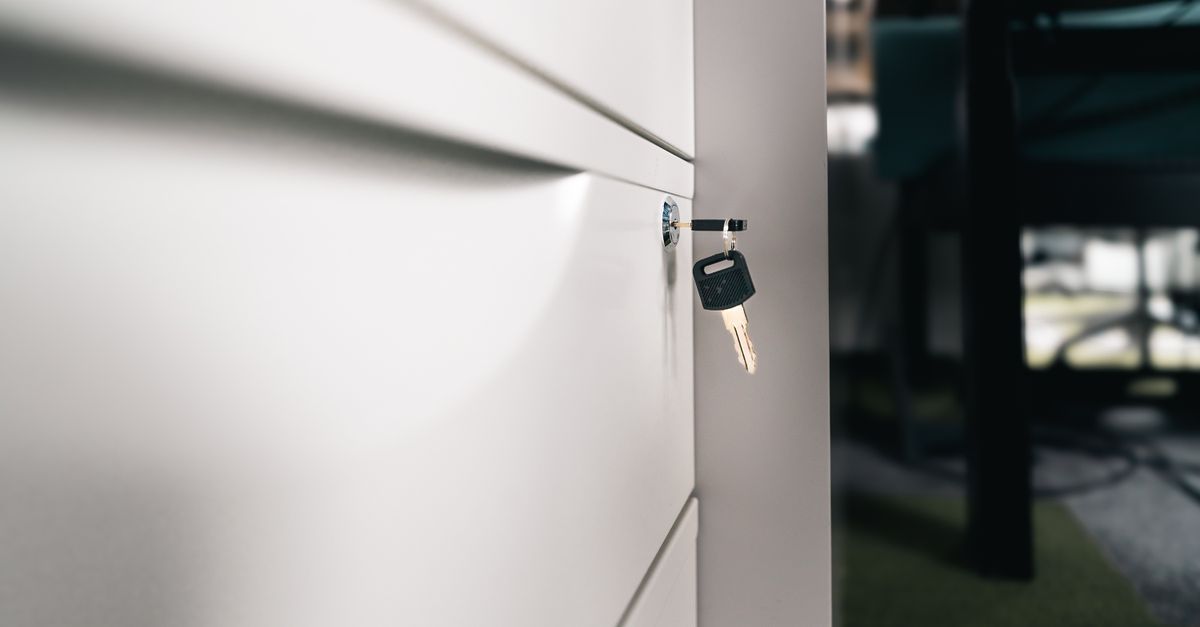
Mortise Lock Installation and Commercial-Grade Hardware Selection
The mortise lock is the backbone of any serious commercial key system in Markham. Unlike a cylindrical knob lock or lever set that bores into the door face, a mortise lock fits into a pocket cut into the door edge, housing the latch, deadbolt, and cylinder in a single heavy-duty case. This construction means the lock body itself cannot be torqued or leveraged out with the same ease as a door knob lock — making it the preferred hardware for office suites, retail storefronts, and any door that needs to hold up to both security demands and high daily traffic. When we design a keyed system for a multi-door property, we almost always specify mortise lock cylinders at primary entry points, paired with complementary cylindrical hardware on interior doors where appropriate.
Selecting the right hardware involves matching the door thickness, backset, handing (which way the door swings), and the fire or accessibility rating of the door frame. Our technicians measure and confirm all of these on-site before ordering or cutting any cylinders. For properties with existing door knob lock sets on interior offices, we can often rekey those into the same master key system without replacing the entire lockset, preserving your investment while unifying access control under one hierarchy. For doors that require an upgrade — particularly main entries and stairwell access points — we install mortise lock bodies that are compatible with your chosen key control system, ensuring every cylinder in the building accepts the same master key logic.

Designing a Master Key System: Our On-Site Process for Markham Properties
Every project starts with a physical survey. We walk every door with you, categorize each one by access level, and map out which roles or individuals need access to which zones. A dental office on Main Street Markham, for instance, might need one zone for treatment rooms accessible only to clinical staff, a second zone for administrative areas, a third for the building common hallway, and a grand master for the owner. A warehouse near the Markham Stouffville Hospital area might need separate zones for shipping, production, and management offices. No two buildings share the same plan, which is why we never apply a pre-packaged template — the hierarchy is built from the specific layout and operational needs of your property.
Once the access matrix is mapped, we generate a keying specification that lists every lock, its assigned change key, and the master key cuts that will work alongside it. We confirm the exact quote for parts and labour before any work begins — the final price reflects factors including the number of cylinders, the type of hardware (mortise lock, cylindrical, padlock), whether existing hardware can be rekeyed or needs replacement, and the travel distance to your location. If you need us on short notice or during off-hours, time of day is also factored in. There are no hidden adjustments after the fact. Once you approve the plan and the price, our team gets to work — rekeying or replacing cylinders door by door, testing every key combination in the hierarchy, and handing you a complete key control record at the end of the job. Need to get the process started? Call (289) 276-8431 anytime — our team is available around the clock.

Emergency Locksmith and Ongoing Support for Keyed Access Systems
Even the most carefully built access system encounters unexpected events: a key is lost, an employee leaves without returning their change key, or a cylinder is damaged during a break-in attempt. Because we're a 24/7 mobile emergency locksmith service, we can respond to these situations any time they happen — not just during business hours. If a night supervisor is locked out of a secure storage room at 2 a.m., or a door knob lock fails on a Friday evening at a Markham retail location, one call to (289) 276-8431 gets a trained technician en route to your property. We verify ownership or authorization on arrival, then work to restore access with the least invasive method available, maintaining your system's integrity rather than forcing or bypassing hardware unnecessarily.
Ongoing maintenance matters for any large key system. Over time, cylinders wear, pins become sluggish, and mortise lock mechanisms may need lubrication or adjustment. As your organization changes — staff turnover, department restructuring, new tenants in a commercial suite — your access hierarchy may need to be updated. We keep records of every system we install and can rekey individual cylinders or entire zones to accommodate those changes without rebuilding the whole system from scratch. Acting as your dedicated commercial locksmith over the long term means we understand your building's layout, your hardware, and your security priorities, which makes each follow-up visit faster and more precise than starting over with someone unfamiliar with your property.
Services Included When You Work With Markham Locksmiths
Our team handles a comprehensive range of work across residential, commercial, and automotive categories. On the commercial and access-control side, we offer: tiered master key system design and installation, grand master and sub-master key hierarchy planning, high-security cylinder supply and installation, mortise lock installation and repair, mortise lock cylinder rekeying, cylindrical lockset rekeying and replacement, door knob lock replacement and rekeying, lever-handle lockset installation, padlock keying into a master system, deadbolt installation and alignment, restricted keyway system setup, key control record management, commercial lockout response, after-hours emergency locksmith callouts, stairwell and common-area door cylinder installation, file cabinet and desk lock rekeying, push-bar exit device installation and servicing, access control consultation and hardware pairing, and multi-tenant building key system coordination. On the residential side, we perform: house lockout response, front door deadbolt installation, sliding door and window lock installation, lock rekeying after a move or lease change, mailbox lock replacement, and garage side-door lock installation. For automotive needs, we cover: car lockout response, transponder key programming, laser-cut key duplication, and ignition cylinder service for a wide range of makes and models. All of these services are delivered mobile — we come to your location throughout Markham and the surrounding area, fully equipped to complete most jobs on the spot.
Frequently asked questions
How many tiers can a master key system realistically have?
Most commercial properties in Markham operate comfortably with two to four tiers: change keys for individual doors, one or two levels of master keys for zones or departments, and a grand master for the owner or building superintendent. Technically, more tiers are possible, but each additional level requires an extra master wafer in every pin chamber, which reduces the number of unique key combinations available in the system and can introduce what locksmiths call 'cross-keying' — where a key in one part of the system accidentally opens a lock it shouldn't. Our technicians calculate the theoretical key space before designing any hierarchy to make sure the system is both functional and secure for the number of users and doors involved.
Can my existing locks be rekeyed into a master key system, or do I need all new hardware?
In many cases, existing cylinders can be rekeyed to work within a new hierarchy — this is particularly common with quality cylindrical locksets and mortise lock bodies that are already installed in commercial doors. The determining factor is the condition of the hardware and whether the cylinder accepts standard pin stacks compatible with the master key logic we're building. Older, worn cylinders, or low-grade hardware not designed for master keying, often need to be replaced to maintain reliability and security. During our on-site survey we assess each door and tell you clearly which locks can be rekeyed and which should be upgraded, before any work is quoted.
What factors affect the final price of a master key system installation?
Several variables determine the final quote: the total number of cylinders in the system, the type of hardware at each door (a mortise lock installation costs differently than rekeying an existing door knob lock), whether any locks need to be replaced versus rekeyed, the specific keyway and key control system selected, your location within the Markham area and the travel involved, and whether the job is scheduled during standard hours or requires an after-hours or emergency callout. We confirm an exact, up-front price after the on-site assessment and before any work begins — there are no surprise additions once the job is underway.
What is a restricted keyway system, and should I add one to my master key hierarchy?
A restricted keyway system uses a proprietary key blank that is not available at hardware stores or standard key-cutting kiosks. Only authorized sources — in this case, our team — can cut new keys for that system. This adds a meaningful layer of key control: even if an employee walks out with their change key, they cannot have a copy made without your authorization. For businesses in Markham managing sensitive areas — law offices, medical clinics, financial offices — we strongly recommend pairing a master key hierarchy with a restricted keyway from the start. Retrofitting restriction later is possible but more involved than building it in from the beginning.
How do I update the system when an employee leaves or a tenant moves out?
When someone leaves with access to a single change key, we can rekey just the one cylinder that key opens, issuing a new change key that fits the same master and grand master. When someone held a master key that opened an entire zone, we rekey every cylinder in that zone and issue new master keys to remaining authorized users. Because we maintain a record of every cylinder and its assigned key cuts from the original installation, these updates are straightforward and don't require a full redesign. Call (289) 276-8431 and describe the scope of the change — we'll advise on the fastest and most secure way to restore proper access control.
Can Markham Locksmiths respond if we're locked out of part of our building in the middle of the night?
Yes — we operate as a 24/7 emergency locksmith service, which means a trained, insured technician is available to respond any time of day or night, including weekends and holidays. If a door knob lock fails, a mortise lock jams, or a key breaks in a cylinder at 3 a.m., call (289) 276-8431 and we'll dispatch to your Markham location. On arrival we verify authorization, then work to restore access using the least invasive method the situation allows, documenting any cylinder that needs to be rekeyed or replaced so your system's integrity is maintained rather than compromised.